Established trees provide significant value to a site, but construction activities can endanger their health and lead to decline or death if not properly protected. The following article outlines the benefits of trees, construction impacts on their health, and guidelines for deciding which trees can and should be protected during construction.
What benefits do established trees provide to a site?
Healthy trees can increase the property value, add an aesthetically pleasing touch, protect against the sun and wind, lower utility costs, provide habitat for local insects and wildlife, and provide environmental benefits such as air purification, soil stabilization, and stormwater retention. Trees also play an important cultural role in our society; many trees are unique, rare, or beloved by a community. Tree removal is often regulated by local municipalities, requiring retention and protection of existing trees, or costly replacement of any removed trees.
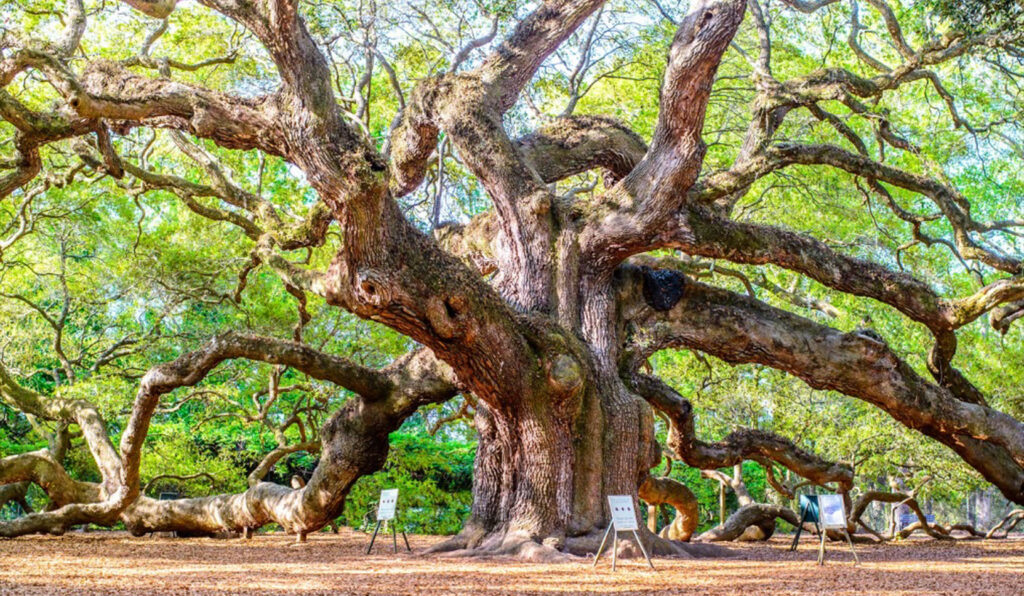
Courtesy of Kim Elliott/Angel Oak Photos
How does construction impact tree health?
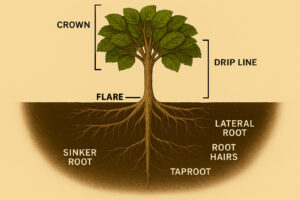 During construction, mechanical damage to a tree’s structure, branches, and roots is a major concern. Conducting excavation, clearing, grading, material delivery, and building with equipment near trees can injure the trunk or branches. Damage to the root system is harder to prevent, as the roots are not visible underground and can spread well past the tree’s drip line, which is the outer edge of the largest branches. The majority of a tree’s roots are located within the first 12 inches of soil, making them susceptible to damage and compaction. Excavation and grading near a tree will injure the roots, and driving or storing heavy equipment and materials near a tree will crush its roots. Even driving over the root area one time with heavy equipment could cause lasting damage. These injuries not only decrease the tree’s ability to grow and heal, but they also allow insects or disease to infect the tree. Severe or prolonged damage and injury can lead to tree decline and death.
If it’s not possible to protect all the trees on a site, how do you decide which ones can be protected?
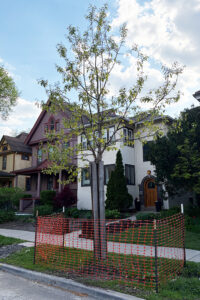
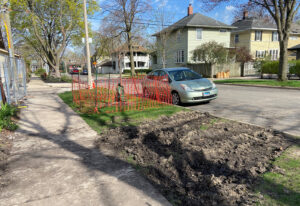
Tree proximity to construction activities is the major factor for determining livability. Avoiding any construction activities near established trees is the clearest way to preserve them. In areas where construction must impact established trees, providing barriers to accessing the area around a tree can protect its health.
Additionally, designers can consider which trees are more valuable and more likely to survive construction activity and then prioritize their protection. Some trees may need to be removed.
- Individual tree characteristics can determine how likely it is to live. Younger, smaller, and healthier trees tolerate more construction stress. Certain tree species can also tolerate more construction activity.
- Arborists use science-based best management practices to determine what areas to protect and techniques to use to increase the likelihood of tree livability.
When does tree protection need to be considered?
- During the survey phase – obtaining a tree inventory along with the rest of the survey, especially for trees near the proposed construction area, will allow better decisions to be made for the health of established trees.
- During the design phase – choices about what trees to remove or protect may influence construction activities and site design.
- Before construction – tree protection techniques need to be implemented before any construction starts.
- During construction – contractors need to avoid any areas fenced off for tree protection.
If in doubt, get an arborist involved! An arborist is the most qualified person to assess the livability of trees on a site.