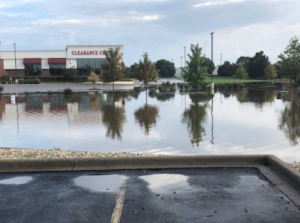
 A series of severe storms, tornadoes, and localized flooding this spring has prompted the State of Wisconsin to request FEMA preliminary damage assessments across multiple regions statewide. These assessments are a required step in determining whether federal disaster assistance may become available for impacted communities. While FEMA assessments do not guarantee funding, they do signal that damage levels are being formally evaluated at the federal level.
At the same time, Wisconsin communities do not need to wait for a federal disaster declaration to begin advancing flood control solutions. The Wisconsin DNR Municipal Flood Control Grant Program provides a critical, readily available funding source to help municipalities reduce flood impacts, protect infrastructure, and improve community resilience.
Municipal Flood Control Grant projects often mirror the types of issues identified during FEMA assessments. These can include flooded roadways and public facilities, undersized or failing culverts and bridges, chronic drainage issues, and needed stormwater or channel improvements. Communities impacted by this spring’s storms may be especially well‑positioned to use DNR flood control grants either as a near‑term solution or in coordination with potential future FEMA hazard mitigation or disaster recovery funding.
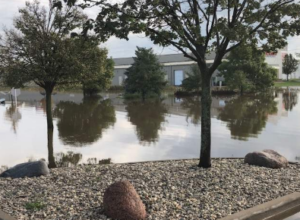 Grant-readiness tip: As FEMA assessments move forward, communities affected by recent storms should continue documenting impacts, tracking repair costs, and identifying both recovery and mitigation needs. Projects such as undersized or damaged culverts, flood‑prone road segments, chronic drainage concerns, and stormwater system improvements may become eligible for FEMA or other resilience funding if a disaster declaration is approved.
Advancing project planning now—through feasibility studies, preliminary engineering, hydraulic modeling, and early environmental coordination—can significantly strengthen eligibility for Wisconsin’s Municipal Flood Control Grant Program and position projects for rapid implementation if additional state or federal funding becomes available.