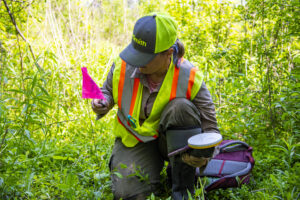
 Earth Day tends to highlight the obvious—the big forests, charismatic wildlife, and faraway places that photograph well. Wetlands don’t always make that list.
Wetlands can look many different ways and, depending on the time of year, may appear as open water or, at other times, dry ground with only a few stubborn plants hanging on.
But that’s kind of the point.
Wetlands do a lot of work, even when it’s not always obvious:
- Holding water and reducing downstream flooding
- Trapping sediment and improving water quality
- Supporting habitat and biodiversity
- Influencing groundwater (both recharge and discharge)
- Storing carbon in soils
- Stabilizing shorelines and streambanks
- Moderating water temperatures, especially in connected systems
It’s easy to assume that current site conditions tell the whole story. However, wetlands are identified based on indicators that reflect long-term patterns—not just what’s visible at a single moment in time.
Spring, for example, is often when wetland conditions are most apparent. Water levels are high (sometimes very high), and the landscape can look very different from what it will be by mid-summer. While hydrologic conditions fluctuate seasonally, wetland boundaries are determined using consistent indicators that reflect typical site conditions. These determinations rely on evaluating vegetation, soils, and hydrology together and on how they reflect prevailing site characteristics.
Wetlands are both state and federally regulated resources, which means they often play a role in site planning and development. When identified early in the process, project teams are better positioned to make informed decisions, avoid unnecessary impacts and costs, and keep projects moving without delays.
This Earth Day, consider not just what’s visible on a site today, but how ecological systems function over time. Thoughtful ecological planning helps reduce risk, supports regulatory compliance, and provides clarity throughout the project lifecycle. raSmith works alongside clients to navigate wetlands, waterways, and habitat-related considerations, offering practical guidance that supports responsible development.
If you’re planning a project, our ecological team is ready to support you. Learn more about our ecological services: https://www.rasmith.com/service/ecological-services/